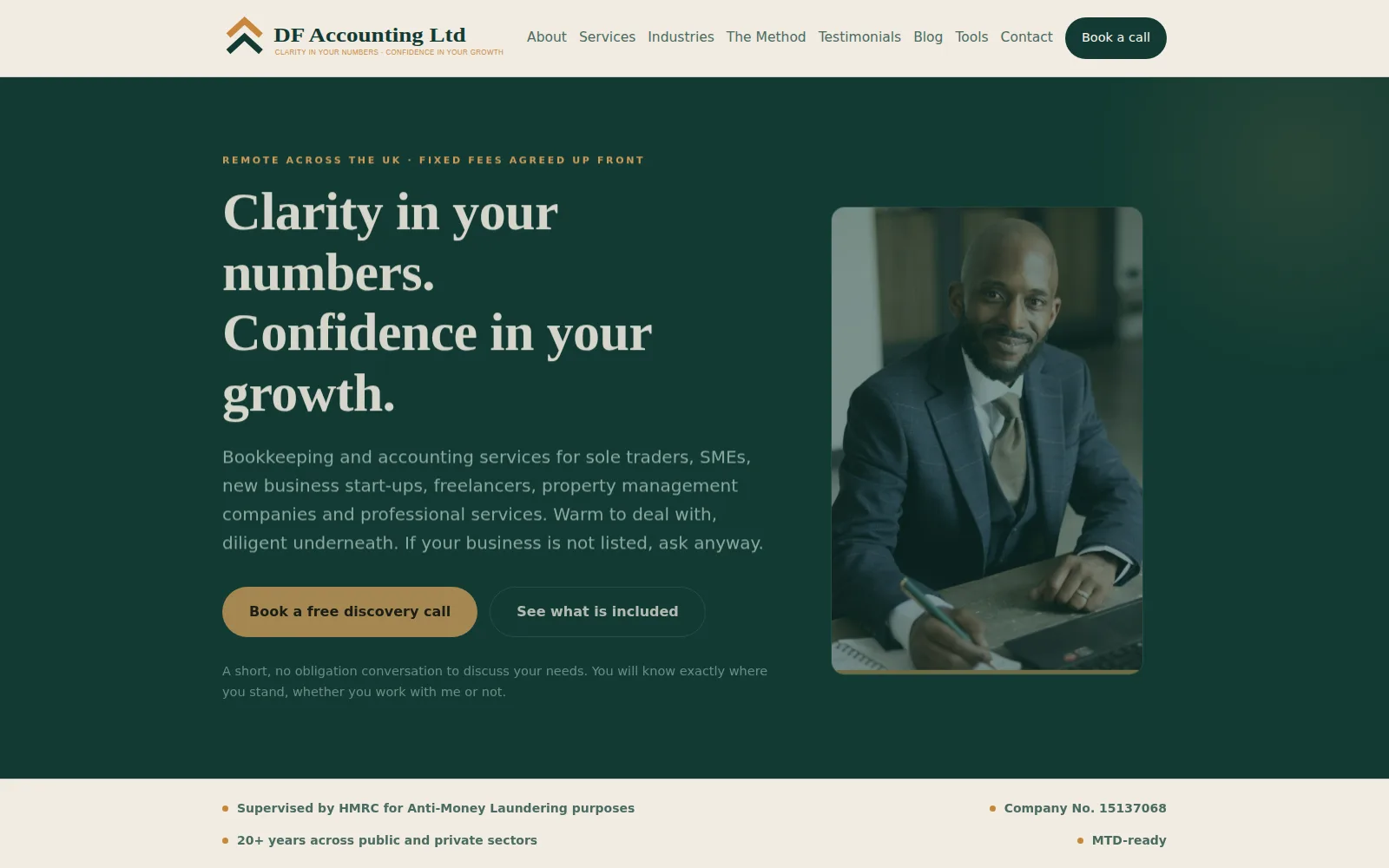

Daneon runs DF Accounting on his own terms: solo, remote, fixed fees agreed up front, and a five-pillar promise he holds himself to on every piece of work. He's twenty years into a career across the public and private sectors before founding the practice, and it shows in how the site already talked. The problem was never the voice. It was that eight pages of good copy has nowhere to go once someone actually wants to know whether you do property management accounts, or what a self-assessment actually costs.
The framework came first
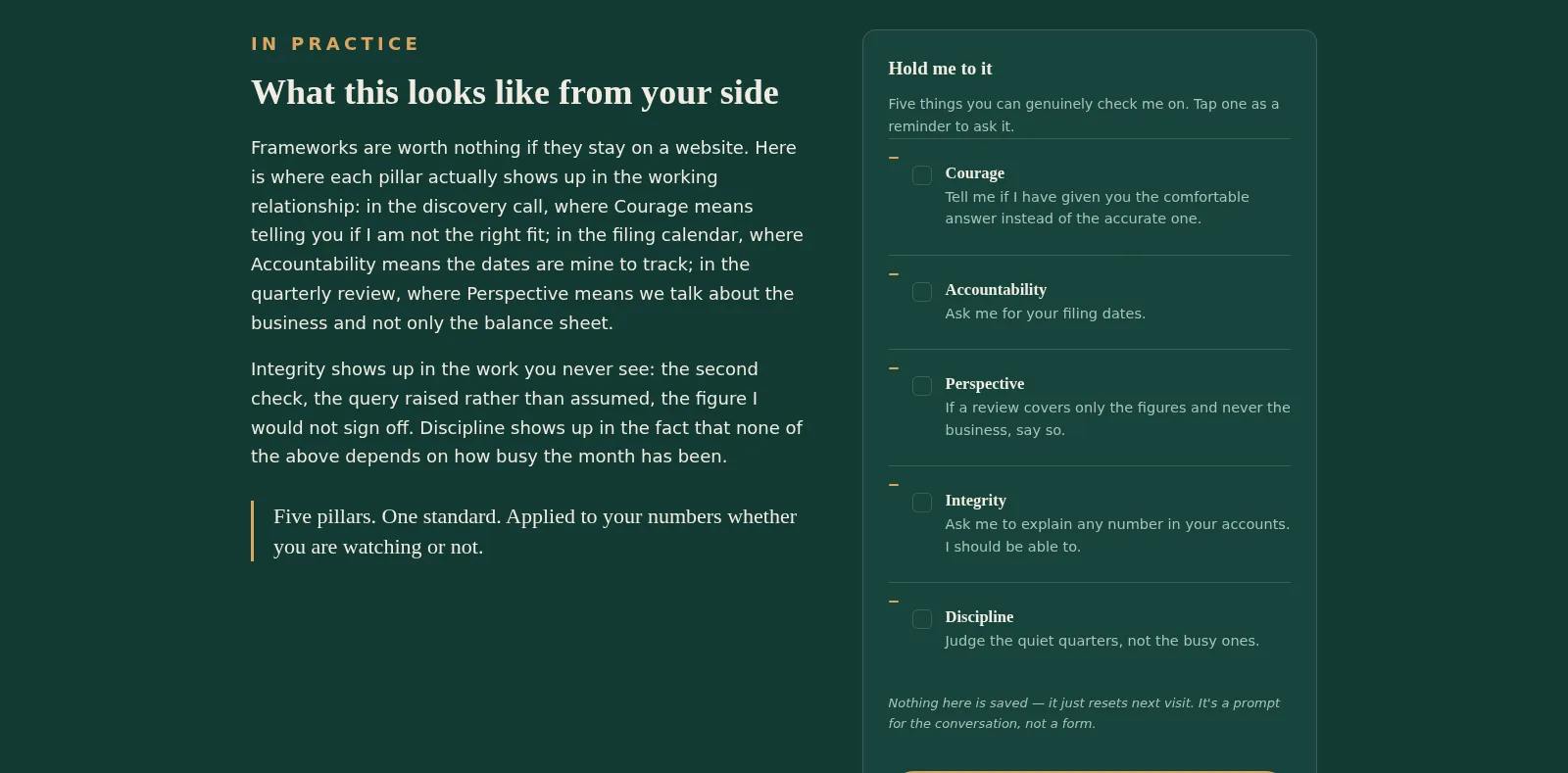
DF Accounting runs on CAPID: Courage, Accountability, Perspective, Integrity, Discipline. It's Daneon's own framework, built before we ever got involved, and it was already sitting at the bottom of the Method page as five static lines. We didn't touch what it means. We gave it somewhere to actually do something: an interactive checklist headed "Hold me to it", five things a client can tick through and genuinely hold Daneon to. Nothing is saved. It's a prompt for the conversation, not a form, which is exactly what a five-pillar promise should be.
Eight pages wasn't enough
We built a dedicated page for every service in the Clarity Package: bookkeeping, year-end accounts, company tax returns, VAT returns, payroll, self-assessment, compliance, cash flow reporting, quarterly reviews. Then a page for every client type Daneon actually takes on: sole traders, SMEs, start-ups, freelancers, property management companies, professional services, cross-linked from a new industries hub instead of one paragraph trying to cover all six. Six blog posts followed, built around the exact questions his own new enquiries ask him: what counts as a business expense, how Making Tax Digital actually works, what year-end accounts mean, what to expect in year one of a limited company.
Two tools that answer the first question
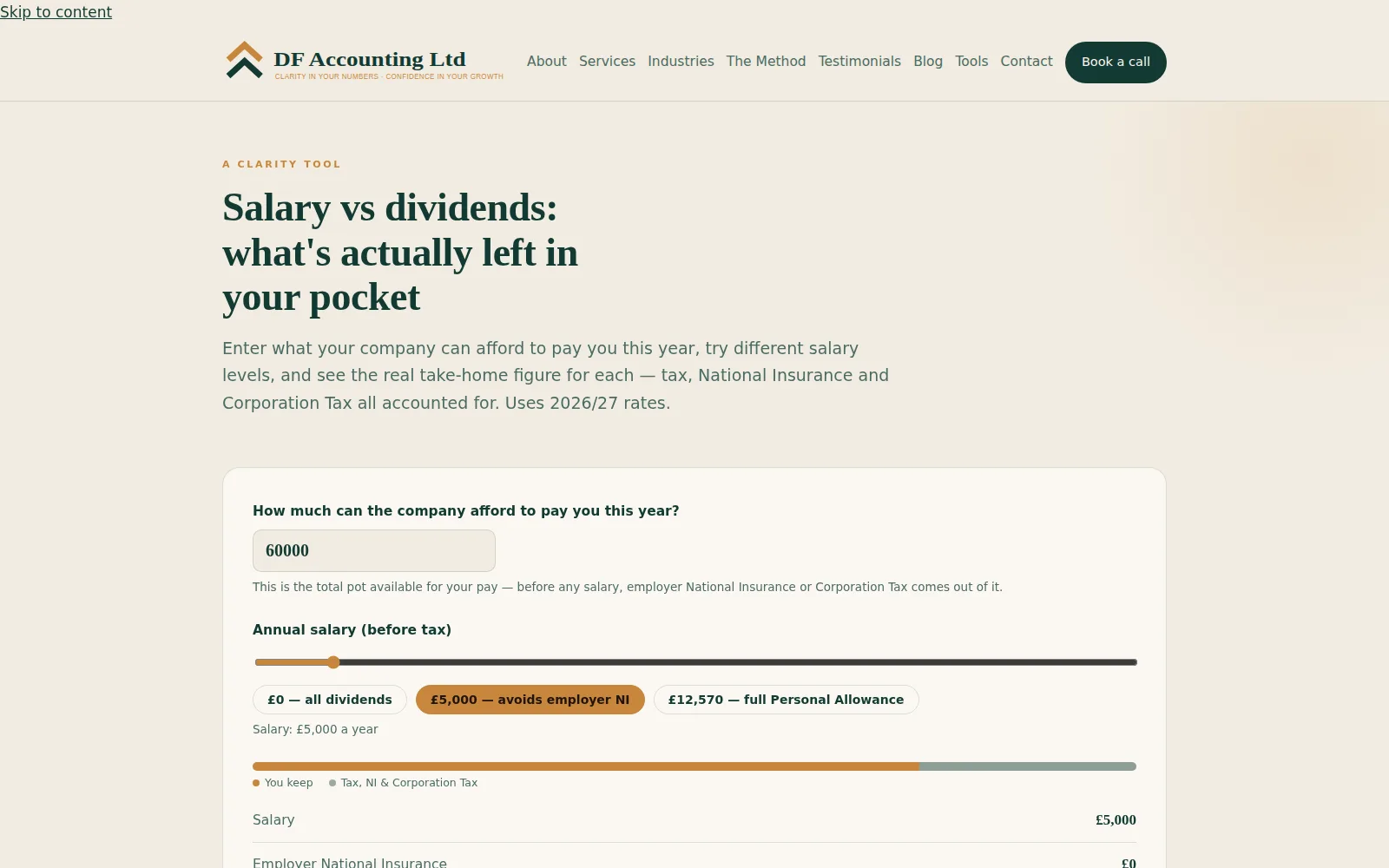
Daneon's own experience is that a new enquiry asks three things almost every time: what it costs, whether he's around outside filing season, and what they can claim to reduce their tax bill. That last one became an expense checker. The other structural question, salary versus dividends, became a full calculator: enter what the company can afford to pay, move the salary slider, and see the real take-home after employer NI, Corporation Tax, income tax, employee NI and dividend tax, all worked out live. Both run entirely in the browser. Nothing is submitted, nothing is stored, which keeps the site's own promise of setting no cookies and tracking nothing completely intact.
The whole rebuild, from first onboarding conversation to a 35-page, feedback-approved site, landed inside a week. That's the first professional-services build in the Zenlio Local roster, and the register is pitched accordingly: warm, plain-spoken, considered, not the mate-down-the-pub tone that suits a tradesperson's site. Regulated work gets a site that reads like it.